Страница даты
10 мая 2026, Воскресенье
Праздники, посты и события
Поста нет.
Для этой даты другие календарные события пока не найдены.
Жития и богослужебные тексты
Sunday of the Samaritan Woman
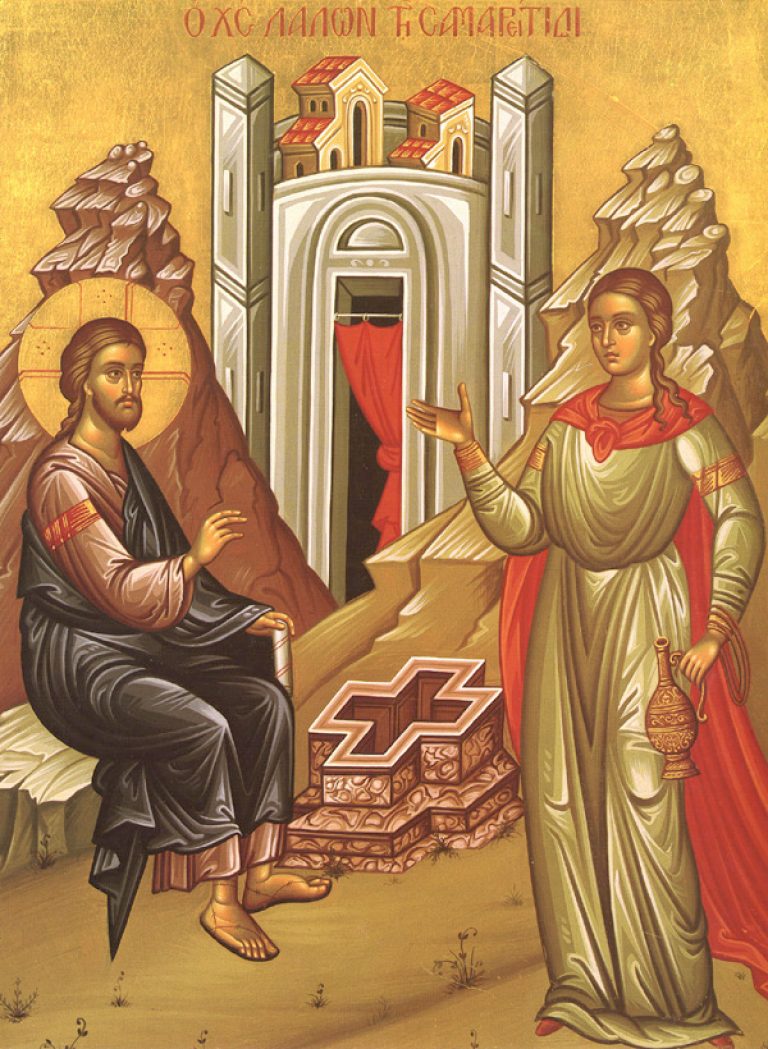
The Holy Martyr Photina (Svetlana) the Samaritan Woman, her sons Victor (named Photinus) and Joses; and her sisters Anatola, Phota, Photis, Paraskevḗ, Kyriake; Nero’s daughter Domnina; and the Martyr Sebastian: The holy Martyr Photina was the Samaritan Woman, with whom the Savior conversed at Jacob’s Well (John. 4:5-42). During the time of the emperor Nero (54-68), who displayed excessive cruelty against Christians, Saint Photina lived in Carthage with her younger son Joses and fearlessly preached the Gospel there. Her eldest son Victor fought bravely in the Roman army against barbarians, and was appointed military commander in the city of Attalia (Asia Minor). Later, Nero called him to Italy to arrest and punish Christians. Sebastian, an official in Italy, said to Saint Victor, “I know that you, your mother and your brother, are followers of Christ. As a friend I advise you to submit to...
Apostle Simon the Zealot
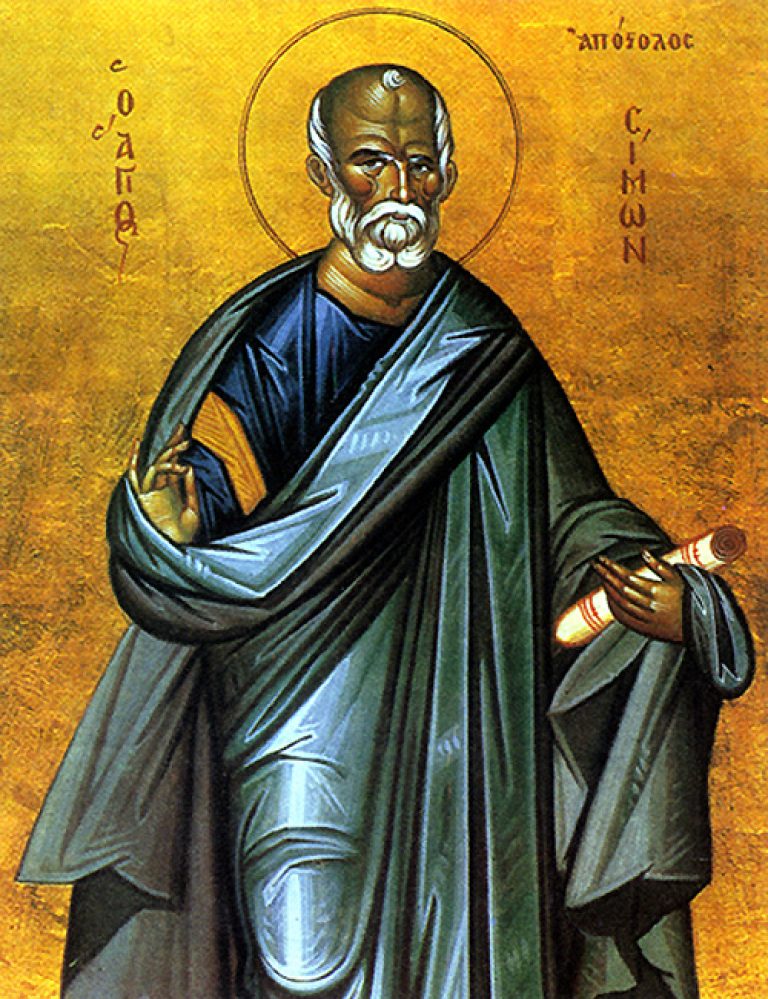
Saint Simon was from Cana in Galilee, and was known to the Lord and His Mother. Tradition says that he was the bridegroom at the wedding where the Savior performed His first miracle. After witnessing the miracle of the water which had been turned into wine, he became a zealous follower of Christ. For this reason, he is known as Saint Simon the Zealot. Saint Simon was one of the twelve Apostles, and received the Holy Spirit with the others on Pentecost. He traveled to many places from Britain to the Black Sea, proclaiming the Gospel of Christ. After winning many pagans to the Lord, Saint Simon suffered martyrdom by crucifixion. Saint Demetrius of Rostov says that this Saint Simon is to be distinguished from the Apostle Simon Peter, and from the Lord’s relative Simon (Mt.13:55), who was the second Bishop of Jerusalem.
Saint Simon, Bishop of Vladimir and Suzdal of the Kiev Near Caves
Saint Simon, Bishop of Vladimir and Suzdal was an author of the Kiev Caves Paterikon, and he became a monk at the Monastery of the Caves, sometime in the second half of the twelfth century. In the year 1206 he was appointed igumen of the Vladimir Monastery of the Nativity of the Theotokos, and in 1214, at the wish of Prince George Vsevolodovich (+ 1238), he was made the first bishop of Vladimir-on-the-Klyazma and Suzdal. In 1218 he consecrated a church at the Nativity monastery, and in the year 1225, a cathedral church at Suzdal. The Great Prince, who deeply respected Saint Simon, was prepared to establish a new bishop’s See at Suzdal for his friend, the monk Polycarp of the Kiev Caves monastery, who sought after spiritual glory. Saint Simon, seeing that Polycarp was not yet ready to assume such an office, talked the Great Prince out of his idea, and he wrote a deeply moving letter to Po...
Martyrs Philadelphus, Cyprian, Alphius, Onesimus, Erasmus, and 14 others, in Sicily
The Holy Martyrs Philadelphus, Alphaeus, Cyprian, Onesimus, Erasmus and 14 others with them, lived during the third century and came from Italy. Alphaeus, Philadelphus and Cyprian were sons of a governor in Italy, named Vitalius. They were enlightened by faith in Christ and baptized by Saint Onesimus. During this period the emperor Licinius issued orders to seek out and hand over the Christians for torture. The brothers went to Rome together with Onesimus, Erasmus and fourteen other Christians. At Rome the pagans crushed the chest of Saint Onesimus with a heavy stone, which killed him. Erasmus and the fourteen Martyrs were beheaded. The brothers Alphaeus, Philadelphus and Cyprian suffered in the city of Mesopolis Leontini in Sicily, where they had been sent from Rome. Saint Philadelphus was burned over an iron lattice in the year 251, in the reign of the emperor Decius.
Martyr Hesychius of Antioch
The Holy Martyr Hesychius of Antioch lived in Antioch during the reign of Maximian Galerius (305-311), and he occupied a high official position. Maximian issued an edict by which all Christians were to be deprived of military rank and expelled from military service. Those who would not renounce Christianity were stripped of their soldier’s belt and military insignia, and degraded to the level of hired servants. Saint Hesychius was one of these. Maximian ordered Hesychius to remove his robes of office, put on common attire, and to be placed among the women servants. After several days he summoned Hesychius and asked, “Are you not ashamed to remain in such dishonor?” Saint Hesychius answered, “The honors which I had from you were only temporal.” Then Maximian gave orders to drown Saint Hesychius in a river, with a millstone tied about his neck. The exact year of the martyr’s death is not k...
Blessed Isidora the Fool of Tabenna in Egypt
Saint Isidora, Fool-for-Christ, struggled in the Tabenna monastery in Egypt during the sixth century. Taking upon herself the feat of folly, she acted like one insane, and did not eat food with the other sisters of the monastery. Many of them regarded her with contempt, but Isidora bore all this with great patience and meekness, blessing God for everything. She worked in the kitchen and fulfilled the dirtiest, most difficult tasks at the monastery, cleaning the monastery of every impurity. Isidora covered her head with a plain rag, and instead of cooked food she drank the dirty wash water from the pots and dishes. She never became angry, never insulted anyone with a word, never grumbled against God or the sisters, and was given to silence. Once, a desert monk, Saint Pitirim, had a vision. An angel of God appeared to him and said, “Go to the Tabenna monastery. There you will see a sister...
Blessed Thais of Egypt
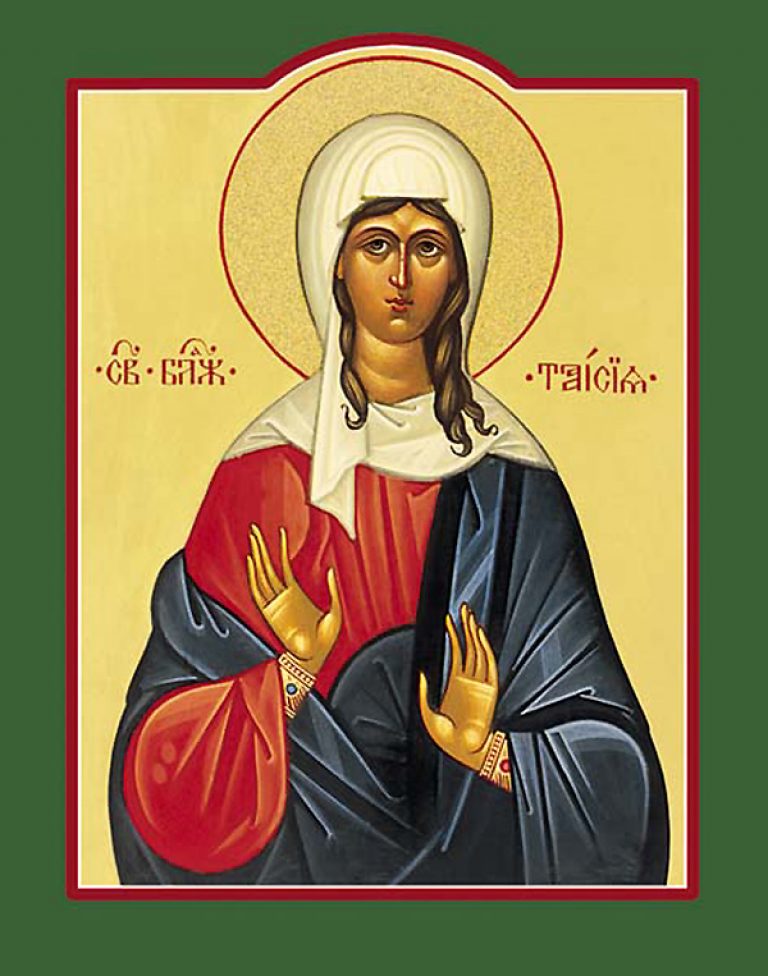
Saint Thais lived in Egypt in the fifth century. Left an orphan after the death of her wealthy parents, she led a pious life, distributing her wealth to the poor, and she gave shelter to pilgrims on her estate. She decided that she would never marry, but would devote her life to serving Christ. After spending all her inheritance, Thais was tempted to acquire more money by any means, and began to lead a sinful life. The Elders of Sketis near Alexandria heard of her fall, and asked Saint John the Dwarf (November 9) to go to Thais and persuade her to repent. “She was kind to us,” they said, “now perhaps we can help her. You, Father, are wise. Go and try to save her soul, and we will pray that the Lord will help you.” The Elder went to her home, but Thais’s servant did not want to allow him into the house. Saint John said, “Tell your mistress that I have brought her something very precious.”...
“Kiev-Bratsk” Icon of the Mother of God

The wonderworking Kiev-Bratsk (i.e. "Brotherhood") Icon of the Mother of God was revealed in 1654, and was originally kept in the church of Saints Boris and Gleb in the city of Vyshgorod (Kiev), and was placed in a shrine to the left of the Royal Doors on the iconostasis. On May 10, 1662, during a war with Poland (1659–1667), the city suffered great damage from the Poles and Crimean Tatars who fought against Russia. The church of the Holy Passion-Bearers Boris and Gleb was ravaged and looted by enemy soldiers, who took all the jewels and icons, but the relics of the Saints were hidden under a crypt. By God's Providence, the wonderworking Icon of the Mother of God was preserved. Some devout Christians, at the risk of their very lives, rescued the Icon of the Mother of God from the unclean hands of those who had stolen it. Since they were unable to hide the Icon, they had to consign it to...
Venerable Comgall of Bangor
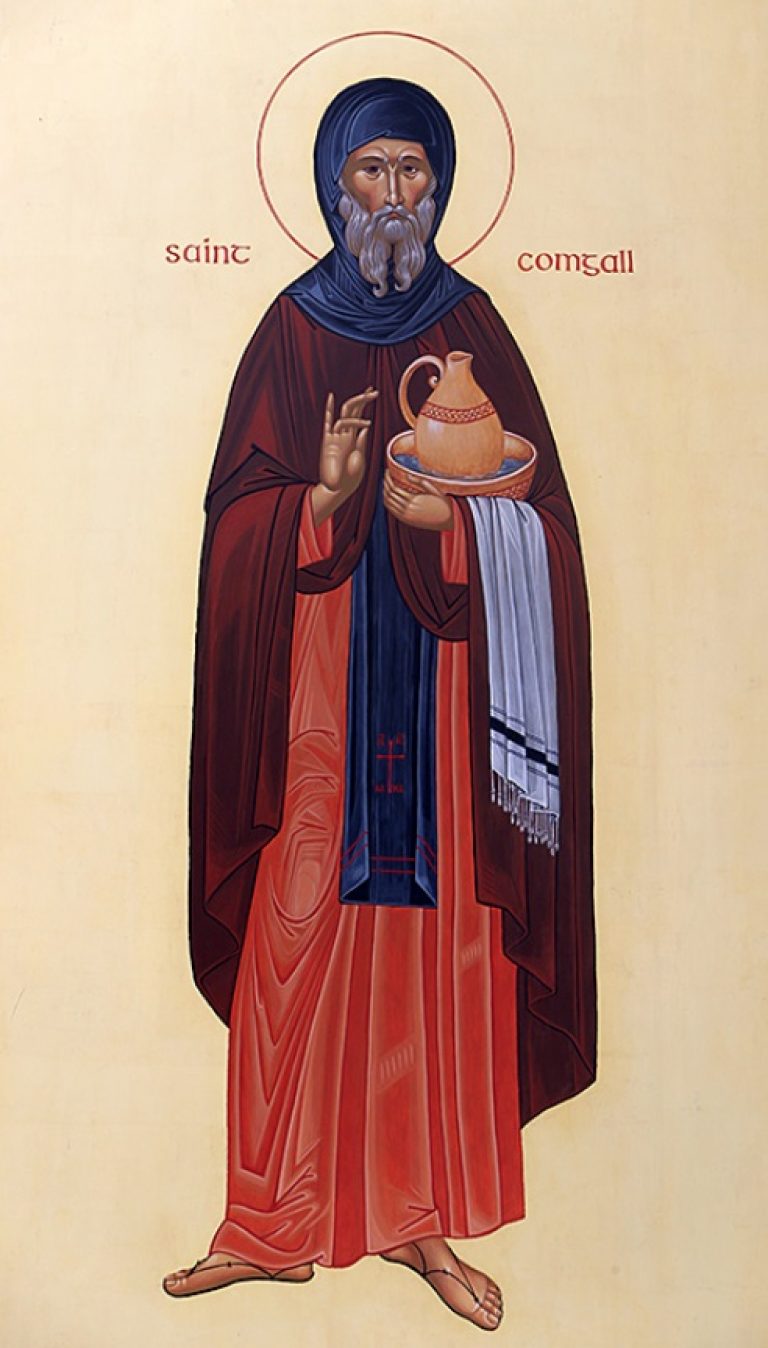
Saint Comgall (Comhghall), “the Father of Monks,” was born in Ireland at Dalaradia, Co. Ulster sometime between 510 and 520. Unlike many of the early Irish saints, Saint Comgall was not of noble birth. He served as a soldier, then studied with Saint Finnian of Moville (September 10). He was ordained to the holy priesthood by Bishop Lugaid before the age of forty. Saint Comgall and several companions lived for a time on an island in Lough Erne in the county of Ulster, where they lived a very strict ascetical life. Although his desire was to be a missionary in Scotland, Bishop Lugaid asked him to stay in Ireland and establish a monastery at Bangor (Bennchor) on the southern shore of Belfast Loch (in modern Co. Down). The monastery was founded sometime between 552-555. It is believed that over four thousand monks were trained by Saint Comgall at Bangor, including Saint Columbanus of Luxeuil...
Feasts & Saints
GOARCH Digital Chant Stand services: 2026-05-10
Calendar index day: 10-Sunday
Simon the Zealot & Apostle
Official Saints category of the Greek Orthodox Patriarchate of Antioch and All the East.